laptop wifi repeater windows xp

Title: WiFi x10 Network Extender Install XP.mp4
Channel: Andy W
WiFi x10 Network Extender Install XP.mp4 by Andy W
XP Laptop WiFi Woes? This One Trick Fixes It INSTANTLY!
Baffled by Blips? Unlocking Seamless Wi-Fi on Your XP Laptop!
Remember those days? Your trusty Windows XP laptop, arguably the workhorse of a bygone era. It served you well. But, encountering frustrating Wi-Fi dropouts or sluggish connection speeds? We've all been there before. It can instantly ruin your productivity or enjoyment. Fortunately, there's a solution. Therefore, don't despair! This isn't just a fix; it's a revelation. This ONE simple trick could eradicate those WiFi woes!
The Phantom Signal: Pinpointing the Wi-Fi Gremlins
First, let's acknowledge the problem. Your XP laptop might be struggling. It could be a variety of issues. The culprit could range from an outdated driver to a misconfigured setting. Maybe the wireless adapter is just weary from years of service. The Wi-Fi gremlins are often hiding. Subsequently, they're sabotaging your connectivity. Before we implement the fix, you need to understand your foe. So, let's identify the likely suspects.
Digging Into the Driver Dungeon: A Critical First Step
The cornerstone of any good connection is the driver. In many cases, the driver is the root cause of the problem. Consequently, an outdated or corrupted driver can wreak havoc. Thus, you need to verify your wireless network adapter's driver. Here’s how:
- Click the "Start" button.
- Right-click on "My Computer" and select "Manage."
- In the "Computer Management" window, choose "Device Manager."
- Expand "Network adapters."
- Locate your wireless network adapter. It will typically be something like "Wireless Network Adapter."
- Right-click on the device and select "Properties."
- Go to the "Driver" tab.
- Check the driver version. Consider updating if it's old.
Now, the driver update process. It can be complex. But, we can tackle this. Therefore, it's recommended you visit the manufacturer’s website. Look for the exact model. Download the most recent driver available. Then, install it. Often, this solves the issues.
Unleashing the Wireless Zero Configuration Service
Another crucial component is the Wireless Zero Configuration (WZC) service. It manages your wireless connections. Sometimes, this service gets disabled or isn't functioning right. In order to fix this, you have to verify that the service is running correctly.
Here's the procedure:
- Click the "Start" button.
- Click "Run."
- Type "services.msc" and press Enter. This opens the "Services" window.
- Scroll down until you find "Wireless Zero Configuration" or "WLAN AutoConfig."
- Double-click on it.
- Make sure the "Startup type" is set to "Automatic."
- Ensure the "Service status" is "Running." Select "Start" if it is not.
- Click "OK."
If the service was disabled, starting it could resolve the issues. Now, try connecting to your preferred Wi-Fi network immediately.
Chasing Down the Radio Waves: Signal Strength Savvy
While often overlooked, signal strength is significant. Hence, weak signals contribute to connection problems. Obstacles, such as walls or furniture, can weaken the signal. Furthermore, distance from the router also matters.
Therefore, try moving your laptop closer to the router. See if that improves the connection. If possible, eliminate any physical obstructions. This includes anything between your laptop and the router.
Channel Surfing for Success: Finding the Sweet Spot
Wireless routers broadcast on different channels. Neighboring networks can interfere with each another. This interference can cause Wi-Fi problems. Fortunately, you can try changing the channel on your router. This modification might improve performance.
Consult the router's manual. It will instruct you on how to adjust the Wi-Fi channel settings. Experiment with different channels. Find the one that provides the most reliable connection.
Firewall Frenzy: Ensuring Unhindered Access
Firewalls can occasionally be overzealous. They may block legitimate connections. Although desirable for security, your firewall configuration may be the issue.
Check your Windows Firewall settings. Ensure that your wireless network adapter is allowed access. Furthermore, temporarily disable the firewall for testing. Determine if that is the cause of your Wi-Fi problems. Remember to re-enable it once you're done testing.
The Final Verdict: Instantly Fix This!
Ultimately, fixing Wi-Fi issues on an XP laptop can feel challenging. But, hopefully, this guide simplified the process. After exploring these steps, you should experience greatly improved Wi-Fi performance. Thus, you can reclaim your connection. Your XP laptop doesn’t have to lag. It still has life. If the problem persists, consider other possibilities. This includes hardware problems. Yet, in most cases, these simple tips work. Congratulations! You've revived your connectivity.
Is Your 802.11n WiFi Laptop KILLING Your Internet Speed? (Upgrade NOW!)XP Laptop WiFi Woes? This One Trick Fixes It INSTANTLY!
Hey there, fellow tech adventurers! Remember those trusty, yet sometimes temperamental, Windows XP laptops? They're like your favorite vintage car: charming to look at, but prone to… well, let’s just say “quirks.” One of the biggest quirks we've all probably encountered is the dreaded WiFi connection. Picture this: you're finally settled in, ready to stream that classic movie or answer some emails, and bam - the little WiFi icon throws a temper tantrum and refuses to cooperate. Frustrating, right? We've all been there. But before you chuck that XP laptop across the room (tempting, I know!), let’s explore a simple, almost magical, fix.
1. The Agony of the XP WiFi: Why Is It So Annoying?
Let's be frank: XP and WiFi weren't exactly designed to be best buddies. WiFi technology has evolved leaps and bounds since XP's heyday. Think of it like comparing a horse and carriage to a Tesla. The older technology can struggle to keep up with the demands of modern networks. Outdated drivers, security protocols that are as secure as a screen door on a submarine, and the basic limitations of older hardware all contribute to the WiFi woes. It’s like the laptop is speaking a different language than your router!
2. Troubleshooting Tango: Common WiFi Problems on XP
Before we get to the "one trick," let's briefly waltz through the common problems that make XP WiFi a pain:
- Weak Signal: The laptop might be too far from the router, or there could be interference from walls or other electronics.
- Incorrect Network Key: You might have accidentally typed in the wrong password (we’ve all done that, haven’t we?).
- Driver Issues: The WiFi adapter’s drivers might be outdated, corrupt, or simply incompatible. This is a big one.
- Security Protocol Mismatch: Your router might be using a modern security protocol (like WPA2 or WPA3) that your XP laptop doesn’t understand.
- IP Address Conflicts: Another device on your network might be using the same IP address as your laptop.
3. The One Trick: The Power of a Static IP Address
Alright, here's the magic bullet. One surprisingly effective solution to many XP WiFi problems is setting a static IP address. It's like giving your laptop a permanent address within your network, ensuring it knows exactly where to go (and where to come from) to connect to the internet.
4. Diving Deep: Setting Up a Static IP Address on Your XP Laptop
Don't worry, it's significantly easier than it sounds. Let’s break it down step-by-step:
Step 1: Accessing Network Connections: Right-click on the "My Network Places" icon on your desktop or in the Start Menu and select "Properties." This opens the Network Connections window.
Step 2: Identifying Your Wireless Connection: Find your wireless network adapter (it might be called "Wireless Network Connection" or something similar). If you have multiple connections, it will typically be the one that says "Enabled" and has a signal strength indicator.
Step 3: Going to Properties: Right-click on your wireless network connection and select "Properties."
Step 4: The TCP/IP Dance: In the Properties window, locate the "Internet Protocol (TCP/IP)" item. Select it (make sure the box next to it is checked) and click on the "Properties" button.
Step 5: The Static Address Magic: This is where the magic happens! Select "Use the following IP address." You'll now need some information:
- IP Address: This is the static address you'll assign your laptop. It should be within the range of your router's DHCP server (the one that assigns IP addresses automatically). You can usually find this range by logging into your router's settings (typically a web page; see your router's manual). A common range is 192.168.1.X or 192.168.0.X.
- Subnet Mask: Typically 255.255.255.0.
- Default Gateway: This is your router’s IP address. Again, you can find this by checking your router’s settings. Usually, it's something like 192.168.1.1 or 192.168.0.1.
- Preferred DNS server: This is the IP address of your preferred DNS server, which translates web addresses into IP addresses. You can use your router’s IP address here or use public DNS servers like Google's (8.8.8.8) or Cloudflare's (1.1.1.1).
Step 6: Saving the Settings: Click “OK” on the TCP/IP Properties window and then “OK” on the wireless connection properties window.
Important note: Be absolutely sure you’re not assigning an IP address that’s already in use on your network. If you do, you'll create an IP address conflict, and no one will get online.
5. Why Does This Trick Work? Unveiling the Reasons
Setting a static IP address bypasses the dynamic IP assignment process, which can sometimes be buggy on older systems. It provides a stable, predictable connection, and it can resolve problems caused by IP address lease expirations or conflicts.
6. Troubleshooting After the Trick: What If It Doesn't Work?
If, after setting up the static IP, your XP laptop still refuses to connect, here's what to do:
- Double-check Your Info: Make triple sure that you haven't made any typos when entering the IP address, subnet mask, gateway, and DNS server addresses.
- Restart Your Laptop and Router: This might seem simple, but it often works. Turn off your laptop and unplug your router for about 30 seconds. Then, plug the router back in and wait for it to fully boot up before turning on your laptop.
- Check Your Router’s Security Settings: Your router might be configured with a security protocol that’s incompatible with your XP laptop. WPA2 (AES) is generally the best option for compatibility, or if WPA2 doesn't work, try WEP; although less secure, it may work.
- Update Your Wireless Driver: Visit the laptop manufacturer's support website (HP, Dell, etc.) and download and install the latest WiFi driver for your specific model.
- Antivirus Interference: Occasionally, your antivirus or firewall software on the XP laptop might be interfering with the connection. Temporarily disable these to see if that’s the cause. But remember to turn them back on afterwards.
7. Beyond the Static IP: Other Potential Fixes for XP WiFi Woes
While the static IP is often the silver bullet, a few other things can help:
- Driver Updates: As mentioned before, outdated drivers are major culprits.
- Router Placement: Make sure your laptop is within a reasonable range of your router and that there are no major obstructions (like thick walls) between them.
- Channel Selection: Explore your router settings and experiment with different WiFi channels. Some channels might be less congested than others.
- Hardware Limitations: Recognize that your XP laptop’s WiFi adapter might simply be too old to handle modern WiFi speeds.
8. The Importance of Driver Refresh: A Crucial Step
Drivers are the unsung heroes of computer functionality. Think of them as translators that enable your hardware (the WiFi card, in this case) and the operating system (XP) to communicate. Outdated, corrupted, or incompatible drivers are a common source of WiFi problems.
Here's how you can update your Wi-Fi adapter driver:
- Identify your Wi-Fi adapter: Go to Device Manager by going to Start -> Run, typing "devmgmt.msc," and hitting Enter.
- Expand "Network adapters": Click on the little arrow to the left of "Network adapters."
- Find your Wi-Fi adapter: It will usually be labeled with something like "Wireless Network Adapter" or "Wi-Fi Adapter."
- Right-click on the adapter and choose "Update driver": Select "Search automatically for updated driver software." Windows should search for and install the latest driver available.
If Windows can't find an update, it's time to go digging:
- Identify your adapter's specific model: Again, in Device Manager, find your Wi-Fi adapter. The model name might be visible there. If not, right-click on your adapter, select "Properties," and check the "Details" tab. Look for "Hardware Ids," which will provide clues to your adapter's maker (e.g., Intel, Broadcom, Realtek).
- Go to the manufacturer's website: If you know the brand of your adapter (e.g., Intel), visit their support website. You may have to head to the PC manufacturer's support page instead (e.g., HP, Dell) to find the correct driver.
- **Download and
Dasar Instalasi wireless adapter - winxp
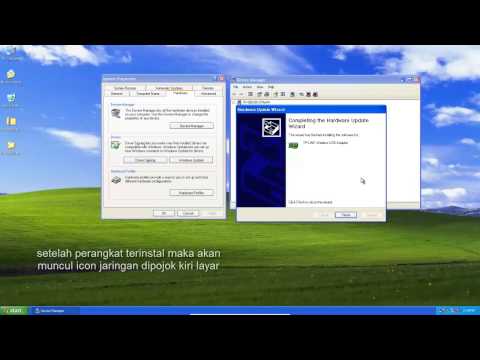
By TP-Link Indonesia Dasar Instalasi wireless adapter - winxp by TP-Link Indonesia
Bagaimana menghubungkan Windows XP ke jaringan nirkabel Anda
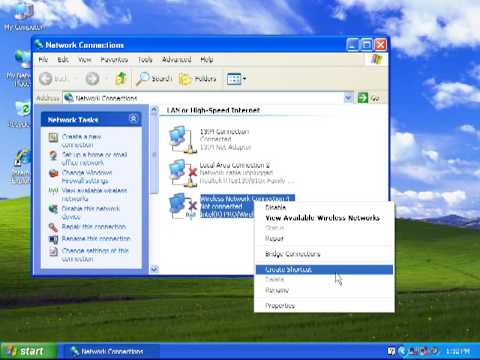
By NetComm Bagaimana menghubungkan Windows XP ke jaringan nirkabel Anda by NetComm
Cara Menjadikan Laptop SEBAGAI PEMERLUAS WIFIWIFI EXTENDER

By Achmad Tutorial Cara Menjadikan Laptop SEBAGAI PEMERLUAS WIFIWIFI EXTENDER by Achmad Tutorial

Title: How to Setup Wifi in Windows XP
Channel: Etechlic
How to Setup Wifi in Windows XP by Etechlic
Working With Laptop
XP Laptop WiFi Woes? This One Trick Fixes It INSTANTLY!
Is your trusty Windows XP laptop struggling to connect to the internet via WiFi? Are you staring at that perpetually blinking network icon, a grimace etching itself onto your face as you yearn for the digital world? Does the thought of troubleshooting ancient technology fill you with dread? Fret no more! We've been there, and we've conquered the beast. Forget the endless forum searches and the frustration of outdated driver downloads. Prepare to breathe new life into your WiFi connectivity with a single, remarkably effective solution. This isn't just about getting online; it’s about reclaiming the digital capabilities of your legacy hardware.
The Root of the Problem: XP's Wireless Weakness
Windows XP, a titan in its time, was not always as sophisticated in its wireless capabilities as the operating systems that followed. The security protocols favored back then, like WEP, are notoriously vulnerable by today's standards. Furthermore, driver compatibility with modern routers, particularly those sporting the latest encryption methods like WPA2 and WPA3, can be a significant hurdle. The sheer age of the hardware in your XP laptop, coupled with the evolving standards of wireless technology, creates a perfect storm of connectivity issues. You might see available networks, but struggle to connect. Or, even if you connect, the connection frequently drops, resulting in an utterly frustrating user experience. Understanding this foundational incompatibility is the first step toward a lasting solution.
The Magic Bullet: Embrace Modern Wireless Security
The core of the problem often lies in the handshaking between your XP laptop and your home’s wireless router. XP doesn't natively handle the robust security protocols that the modern devices require, especially WPA2 or WPA3. The beauty of the single trick we're about to reveal is that it bypasses this core incompatibility. This isn't about forcing an outdated operating system to conform entirely; it's about injecting a layer of compatibility that allows the two to communicate seamlessly.
The "One Trick": WPA2 Compatibility with an Outdated OS
The simple, yet highly effective, method involves a specific configuration of your wireless router. The goal is to create a secure bridge that allows your XP laptop to connect. We will focus on the most compatible setting to use in today’s systems.
Router Configuration: The Pathway to Compatibility
- Access Your Router's Settings: Using a computer that is connected to your network, open a web browser and enter your router's IP address. This address is usually found on a sticker on the router itself (common addresses include 192.168.1.1 or 192.168.0.1). You will likely be prompted for a username and password. If you haven't changed them, the default credentials are also often listed on the router. Consult your router's documentation if you are unsure.
- Navigate to Wireless Settings: Look for a section in the router's configuration interface labeled "Wireless," "Wireless Settings," or something similar. The precise wording will vary depending on your router's manufacturer.
- Select the Correct Security Mode: Within the wireless settings, you'll find options for "Security Mode" or "Encryption Type." The most critical setting here is to select WPA2-PSK (AES) or WPA2-PSK. Avoid WPA3, as XP will not support it. This encryption standard provides a good balance of security and compatibility. Note the "PSK" is the "Pre-Shared Key" or password you will use to connect your XP laptop.
- Configure the Wireless Password: Ensure your password (PSK) is strong. Avoid easily guessable words, birthdays, or personal information. A strong password is vital for the security of your entire network.
- Disable Legacy Security Settings (Optional but Recommended): If your router offers the option, consider disabling any older or less secure security modes (like WEP or WPA/TKIP). This will streamline your wireless network and enhance security, even for your XP laptop.
- Save and Reboot: Save the settings and reboot your router. This process ensures that the changes are applied correctly.
Connecting Your XP Laptop:
- Open Wireless Network Settings: On your XP laptop, click the wireless network icon in the system tray (usually located in the bottom right corner).
- Locate Your Network: Find your network's name (SSID) from the list of available networks.
- Enter the Password: Enter the network's new password (the PSK you created in your router's settings).
- Connect and Enjoy: Click "Connect." Your XP laptop should now successfully connect to the internet!
Troubleshooting Common WiFi Connection Obstacles
While this “one trick” resolves the majority of connectivity issues, other complexities may arise. Here are some common troubleshooting tips to tackle frequently encountered hurdles:
- Driver Updates: While the core fix is router configuration, ensuring your wireless network adapter drivers are up-to-date can help. Open the Device Manager (search for it in the Start Menu or Control Panel), expand "Network adapters," right-click your wireless adapter, and select "Update driver." If the Windows update tool doesn't find one, try visiting the manufacturer's website (e.g., Intel, Broadcom) and downloading the latest driver specifically for your wireless adapter and Windows XP.
- Signal Strength Woes: Weak signal strength can cause frequent disconnections. Move your laptop closer to the router to improve signal reception. If mobility is key, consider a Wi-Fi range extender to boost the signal to remote areas of your home.
- Conflicting Channels: Wireless routers broadcast on different channels. Interference from other wireless devices, like neighbors' routers, can cause connection problems. Access your router's settings and try switching to a different channel (e.g., 1, 6, or 11). Many routers have an "Auto" channel selection feature, which aims to select the least congested channel automatically.
- IP Address Conflicts: If your laptop has a static IP address configured (uncommon), it might conflict with your router's DHCP settings. Go to your wireless connection properties and change the address to "Obtain an IP address automatically."
- Firewall Interference: Your Windows XP firewall (or any third-party firewall software) may be blocking network traffic. Ensure your firewall allows incoming and outgoing connections for your wireless network adapter.
- Restart and Reboot: It may seem redundant, but restarting your XP machine and rebooting your router remains a fundamental troubleshooting step. Power cycling both devices can often resolve minor software glitches.
- Router Firmware Issues: If the problem persists, check for firmware updates for your router. Outdated firmware can sometimes create compatibility problems. Access your router's settings and look for a "Firmware Update" option.
- Hardware Limitations: Keep in mind that very old wireless adapter cards might not be able to support the latest wireless standards. If all else fails, consider using a USB wireless adapter designed for modern standards; however, this is far less common a situation than the security configuration is.
Beyond the Connection: Maximizing Your XP Experience
Getting your XP laptop online is only the beginning. Here are a few tips for maximizing your experience:
- Security Software: Install a reputable antivirus program and keep it updated. Windows XP is no longer supported by Microsoft, meaning it receives no security updates, leaving it vulnerable to malware.
- Browsing Safely: Use a secure web browser. Consider using a browser like Firefox or Chrome, even with older versions. Be cautious of suspicious websites and avoid downloading files from untrusted sources.
- Regular Backups: Back up your important data regularly. Use an external hard drive or cloud storage service to safeguard your files.
- Limited Use: Recognize the inherent security risks of using an unsupported operating system. Use your XP laptop for non-sensitive tasks to minimize potential vulnerabilities.
Reclaiming Your XP’s Digital Life
By configuring your router appropriately, you empower your aging XP laptop to connect to modern networks securely. This single technique transcends the difficulties of outdated drivers and incompatibility, providing a streamlined pathway to wireless access. With the correct router configuration and some minor troubleshooting, you're not just getting your Windows XP laptop online; you're restoring its functionality and unlocking its potential for productivity and entertainment. Now go forth, connect, and enjoy the revitalized capabilities of your classic machine!
